
Uber and Lyft have changed how people travel throughout Beverly Hills. Rideshare vehicles are everywhere: outside the LAX airport, going to the Crypto.com Arena, near The Beverly Hills Hotel and Beverly Hilton, around restaurants, in nightlife districts, at shopping centers, and in residential neighborhoods. But when a crash happens, the injury claim is often more complicated than a standard two-car accident.
The most important question is usually not just who caused the crash. It is also what the Uber or Lyft driver was doing at the time. Was the driver offline? Was the app on while the driver waited for a ride request? Had the driver accepted a ride? Was a passenger already inside the vehicle? Those facts can determine which insurance policy applies and how much coverage may be available.
A rideshare accident can injure passengers, other motorists, pedestrians, bicyclists, scooter riders, and even the Uber or Lyft driver. The Injury Partners personal injury lawyers in Beverly Hills help injured people understand which insurance policies may apply, what evidence should be preserved, and how to protect the value of a Beverly Hills rideshare accident claim.
Why Uber and Lyft Accident Claims Are Different
A regular car accident claim usually starts with the at-fault driver’s personal auto insurance. Uber and Lyft cases are different because rideshare companies use layered insurance systems that change based on the driver’s status in the app.
That means two crashes involving the same driver could have very different coverage outcomes. If the driver was using the vehicle for personal reasons, the driver’s personal auto policy may apply. If the driver was logged into the Uber or Lyft app, rideshare coverage may become available. If the driver had already accepted a ride or was carrying a passenger, much larger commercial coverage may apply.
This is why app data, trip receipts, screenshots, phone records, GPS records, and claim correspondence matter. The insurance company may not volunteer the highest available coverage unless the facts are developed properly.
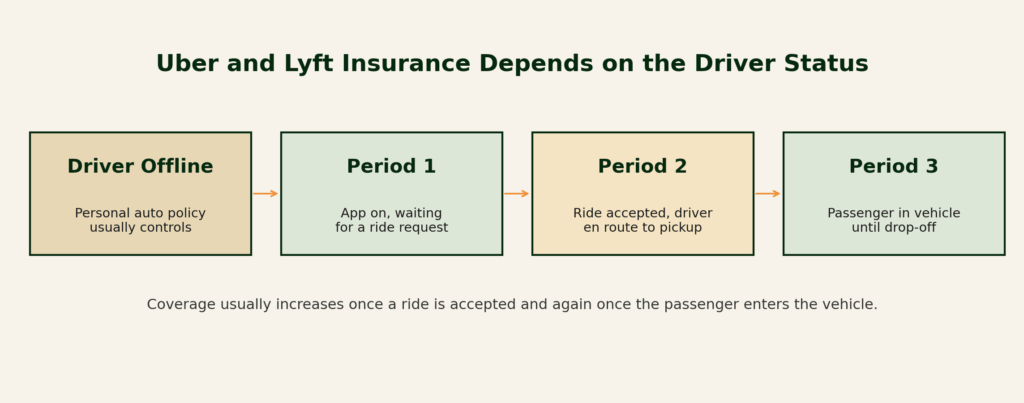
Chart 1: Rideshare insurance depends heavily on the driver’s app status at the time of the collision.
The Three Rideshare Periods in Beverly Hills
Beverly HIlls rideshare insurance rules generally divide Uber and Lyft activity into three periods. Understanding these periods is one of the first steps in evaluating a rideshare accident claim.
| Period | Driver Status | Why It Matters | Coverage Issue |
| Offline | Driver is not logged into the app | Usually treated like an ordinary personal auto accident | Personal auto coverage usually controls |
| Period 1 | App is on, but no ride has been accepted | Rideshare activity has started, but no passenger has been matched | Lower rideshare coverage may apply |
| Period 2 | Driver accepted a ride and is heading to pick up the passenger | The ride transaction has begun even though the passenger is not yet inside | Commercial rideshare coverage may apply |
| Period 3 | Passenger is in the vehicle until the ride ends | The passenger is actively being transported | The highest rideshare coverage may apply, including UM/UIM coverage in some situations |
The California Public Utilities Commission explains that Period 1 begins when the app is open and the driver is waiting for a match. Period 2 begins after a match is accepted and before pickup. Period 3 runs while the passenger is in the vehicle until the passenger exits. These details are critical because the available insurance can change from one period to the next.
How Much Insurance Applies in an Uber or Lyft Accident?
Coverage is one of the biggest reasons rideshare cases require careful investigation. California’s ordinary minimum liability coverage for private passenger vehicles is currently $30,000 for injury or death to one person, $60,000 for injury or death to more than one person, and $15,000 for property damage. Those limits may be far too low after a serious injury.
Rideshare coverage can be significantly higher, but only if the facts place the driver in the correct app period. For example, California rules require Transportation Network Companies to provide at least $50,000 per person, $100,000 per incident, and $30,000 for property damage during Period 1, along with additional excess coverage. During Periods 2 and 3, TNCs must provide primary commercial insurance in the amount of $1 million. During Period 3, TNCs must also provide $1 million in uninsured and underinsured motorist coverage.
The practical takeaway is simple: do not assume the first insurance policy identified is the only source of recovery. An attorney should determine whether the driver was logged in, whether a ride had been accepted, whether a passenger was in the vehicle, and whether Uber, Lyft, the driver, another driver, an employer, or another third party may carry applicable coverage.
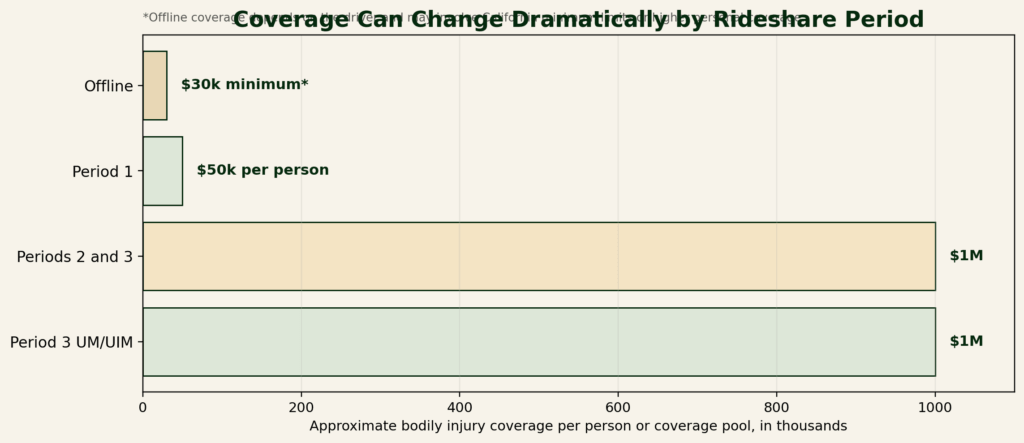
Chart 2: The available coverage can change dramatically depending on whether the rideshare driver was offline, waiting, en route, or carrying a passenger.
Who Can Bring a Claim After an Uber or Lyft Accident?
Rideshare crashes can affect more than the person sitting in the Uber or Lyft vehicle. Depending on the facts, several different people may have claims:
- Uber or Lyft passengers injured during a ride.
- Drivers and passengers in other vehicles hit by a rideshare driver.
- Pedestrians struck by an Uber or Lyft driver.
- Bicyclists or scooter riders hit by a rideshare vehicle.
- Uber or Lyft drivers injured by another negligent driver.
- Family members pursuing wrongful death damages after a fatal rideshare crash.
The answer depends on fault, available insurance, app status, and the relationship between the parties. If the crash involved an active Uber or Lyft ride, Uber accident lawyers can help identify the rideshare period and preserve the records needed to prove coverage.
Common Causes of Uber and Lyft Accidents
Many rideshare crashes happen because drivers are trying to manage passenger requests, navigation, traffic, pickup locations, and app notifications at the same time. Common causes include:
- Distracted driving from app use, GPS directions, calls, or text notifications.
- Unsafe pickups or drop-offs in active lanes, bus zones, red zones, or crowded commercial areas.
- Speeding while trying to complete more rides or reach a passenger faster.
- Sudden stops when a driver spots a passenger at the curb.
- Unsafe lane changes near hotels, restaurants, nightlife districts, airports, and event venues.
- Driver fatigue from long rideshare shifts.
- DUI or drug-impaired driving by the rideshare driver or another motorist.
- Failure to yield to pedestrians, cyclists, or scooter riders.
What to Do After an Uber or Lyft Accident in Beverly Hills
The steps you take after a rideshare accident can affect both your health and your claim. If you are physically able, try to preserve evidence before app data, vehicle information, and witness details disappear.
- Call 911 if anyone is injured or if the crash created a traffic hazard.
- Get medical attention as soon as possible, even if symptoms seem mild at first.
- Take screenshots of your Uber or Lyft ride, including driver name, vehicle information, route, pickup location, drop-off location, fare receipt, and trip time.
- Photograph vehicle damage, license plates, the crash scene, visible injuries, traffic signals, road conditions, and nearby businesses with cameras.
- Get names and contact information for witnesses, drivers, passengers, and responding officers.
- Report the crash through the Uber or Lyft app, but avoid giving detailed recorded statements before speaking with an attorney.
- Do not accept an early settlement before you understand your diagnosis, future care needs, and the available insurance coverage.
- Contact an attorney early so app records, insurance information, and surveillance footage can be preserved.
What If You Were an Uber or Lyft Passenger?
Passengers are often in a stronger position than drivers because they usually did not cause the crash. But that does not mean the claim is automatic. The insurance companies may still dispute which driver caused the collision, whether the rideshare policy applies, whether your injuries were caused by the crash, and whether your medical treatment was reasonable.
As a passenger, your claim may involve the rideshare driver’s coverage, Uber or Lyft’s commercial policy, another driver’s insurance, uninsured motorist coverage, underinsured motorist coverage, or a combination of policies. This is why passengers should preserve the trip receipt and avoid assuming that one insurer will handle everything fairly.
What If You Were Hit by an Uber or Lyft Driver?
If you were driving, walking, biking, or riding a scooter when an Uber or Lyft driver hit you, your claim may depend on whether the rideshare driver was actively using the app. The driver may say the crash was personal, while app records may show the driver was waiting for a request, heading to a pickup, or carrying a passenger.
This matters because rideshare coverage may be much higher than the driver’s personal auto policy. It can also affect which insurer must investigate, defend, and pay the claim. If the crash involved a cyclist or scooter rider, the claim may require additional analysis of roadway positioning, visibility, traffic controls, helmet use, lighting, and comparative fault arguments.
What If the Crash Involved a Delivery Driver or Commercial Vehicle?
Some cases that look like rideshare accidents are actually delivery, courier, employer, or commercial vehicle cases. If the at-fault driver was delivering food, working for an employer, driving a truck, or using a vehicle for business purposes, additional policies may be available. This is why early investigation matters in rideshare, delivery, truck accidents, and other commercial driving cases.
What Compensation Can You Recover After a Rideshare Accident?
The value of an Uber or Lyft accident claim depends on the injuries, medical treatment, lost income, liability facts, and available insurance. Compensation may include:
- Emergency room care, urgent care, ambulance bills, and diagnostic testing.
- Follow-up medical treatment, physical therapy, chiropractic care, orthopedic care, pain management, injections, and surgery when medically necessary.
- Lost wages and reduced earning capacity.
- Vehicle repair, total loss, rental expenses, and other property damage.
- Pain and suffering, emotional distress, anxiety, sleep disruption, and loss of enjoyment of life.
- Future medical care and long-term limitations.
- Wrongful death damages when a rideshare crash is fatal.
If you lost a loved one, our wrongful death lawyers in Beverly Hills can help evaluate the available claims, insurance policies, deadlines, and damages under California law.
Common Insurance Company Defenses in Uber and Lyft Cases
Insurance companies often look for ways to reduce or delay payment after a rideshare crash. Common defenses include:
- The driver was not logged into the app.
- The driver had not accepted a ride yet.
- Another driver caused the crash.
- The passenger was not wearing a seatbelt.
- The injuries are preexisting or unrelated.
- The medical treatment was excessive.
- There was a gap in treatment.
- The injured person waited too long to report symptoms.
- The claim should be handled under a lower-limit personal policy rather than the rideshare policy.
An experienced attorney can push back by collecting app records, police reports, witness statements, vehicle photos, medical documentation, insurance declarations pages, and any available surveillance footage.
California Deadlines for Uber and Lyft Accident Claims
Most Beverly Hills personal injury claims must be filed within two years from the date of injury under Code of Civil Procedure section 335.1. If a public entity may be responsible, such as a dangerous road condition, public transit vehicle, government vehicle, or roadway design issue, a government claim may need to be presented within six months under Government Code section 911.2.
| Claim Type | Typical Deadline | Why It Matters |
| Personal injury claim | Generally 2 years | Applies to most California injury lawsuits |
| Government entity claim | Often 6 months | Can apply if a public entity may share fault |
| Property damage claim | Often longer than injury claims | Vehicle repair and total loss issues may have separate timing |
| Wrongful death claim | Generally 2 years from death | Family members may have separate claims after a fatal crash |
How The Injury Partners Can Help After an Uber or Lyft Accident
Rideshare accident claims require quick investigation and careful insurance analysis. The Injury Partners can identify the rideshare period, request insurance information, communicate with the rideshare company and insurers, preserve evidence, coordinate medical documentation, and pursue the full value of the claim.
You can learn more when you meet our Beverly Hills personal injury attorneys. The firm can also help with related injury claims involving premises liability, dog bites, truck accidents, and bike or scooter accident cases when a different type of negligence caused the injury.
If you were injured in an Uber or Lyft accident anywhere in California, you can request your free consultation online. You pay nothing out of pocket unless compensation is recovered for you.
Frequently Asked Questions About Uber and Lyft Accidents
1. Who pays after an Uber or Lyft accident?
Payment may come from the rideshare driver’s personal policy, Uber or Lyft’s rideshare policy, another driver’s insurance, UM/UIM coverage, a commercial policy, or more than one policy. The answer depends on fault and the rideshare driver’s app status.
2. Does Uber or Lyft provide $1 million in coverage?
California rules require $1 million in primary commercial insurance during Periods 2 and 3, meaning after the driver accepts a ride and while the passenger is in the vehicle. Coverage is different during Period 1 and when the driver is offline.
3. What should I do if I was a passenger in an Uber or Lyft crash?
Get medical care, save your trip receipt, take screenshots, report the crash, photograph the scene if possible, and speak with an attorney before giving detailed statements or accepting a settlement.
4. Can pedestrians, cyclists, and scooter riders bring Uber or Lyft claims?
Yes. If a rideshare driver injures a pedestrian, bicyclist, or scooter rider, the injured person may bring a claim against the responsible driver and applicable insurance policies.
5. What if another driver caused the Uber or Lyft crash?
You may have a claim against the other driver, and depending on the facts, rideshare UM/UIM coverage may also matter if the other driver is uninsured or underinsured.
6. How long do I have to file an Uber or Lyft accident claim in California?
Most injury claims are subject to a two-year statute of limitations, but some cases have shorter deadlines, especially when a government entity may be involved. Evidence deadlines are often much shorter than legal deadlines.