
Most personal injury cases do not follow a single fixed timeline. A straightforward claim with clear liability, completed medical treatment, and enough insurance coverage may resolve in several months. A more serious case involving surgery, disputed fault, multiple defendants, commercial insurance, government entities, or trial preparation can take a year or more.
The most important thing to understand is that faster is not always better. A settlement reached too early may leave out future medical care, lost earning capacity, pain and suffering, or complications that develop after the initial injury. The goal is not simply to finish quickly. The goal is to resolve the case at the right time, with the right evidence, and for the right value.
The Injury Partners personal injury lawyers in Beverly Hills help injured people understand where their case is in the process, what must happen next, and what can be done to move the claim forward without sacrificing value.
Personal Injury Case Timeline at a Glance
Every case is different, but many California personal injury claims move through the following general stages:
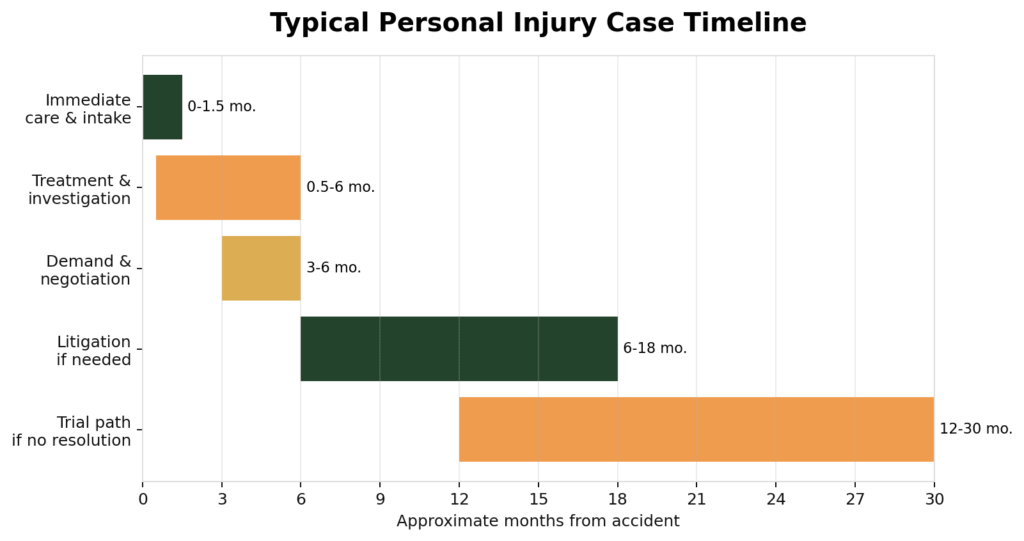
| Stage | Typical Timing | What Happens |
| Medical care and intake | First days to several weeks | The injured person gets treatment, reports the claim, preserves evidence, and consults an attorney. |
| Treatment and investigation | 1 to 6+ months | Medical records develop, symptoms become clearer, and liability evidence is collected. |
| Demand package and negotiation | After treatment stabilizes | The attorney sends a settlement demand with evidence of liability, damages, and insurance coverage. |
| Lawsuit if needed | Often 6 to 18+ months after injury | A lawsuit may be filed if the insurer denies liability, undervalues the case, or delays payment. |
| Discovery, mediation, and trial preparation | Several months to 2+ years | The parties exchange evidence, take depositions, use experts, mediate, and prepare for trial if settlement fails. |
Why Some Personal Injury Cases Settle Quickly
Some cases move faster because the facts are simple. For example, if a rear-end crash causes modest soft tissue injuries, the injured person completes treatment in a few months, liability is clear, and the at-fault driver has available insurance, the claim may be ready for settlement once the medical records and bills are complete.
A case may resolve faster when:
- Liability is clear and supported by photos, police reports, witness statements, or video footage.
- The injured person receives prompt medical care and follows the treatment plan.
- The injuries improve without surgery or long-term care needs.
- The available insurance coverage is enough to pay a fair settlement.
- The insurance company evaluates the claim reasonably.
Why Some Personal Injury Cases Take Longer
A case usually takes longer when the insurance company has a reason to fight. That reason may be liability, causation, injury severity, medical treatment, policy limits, or the amount of damages. The timeline also lengthens when the injured person is still treating and the full extent of harm is not yet known.
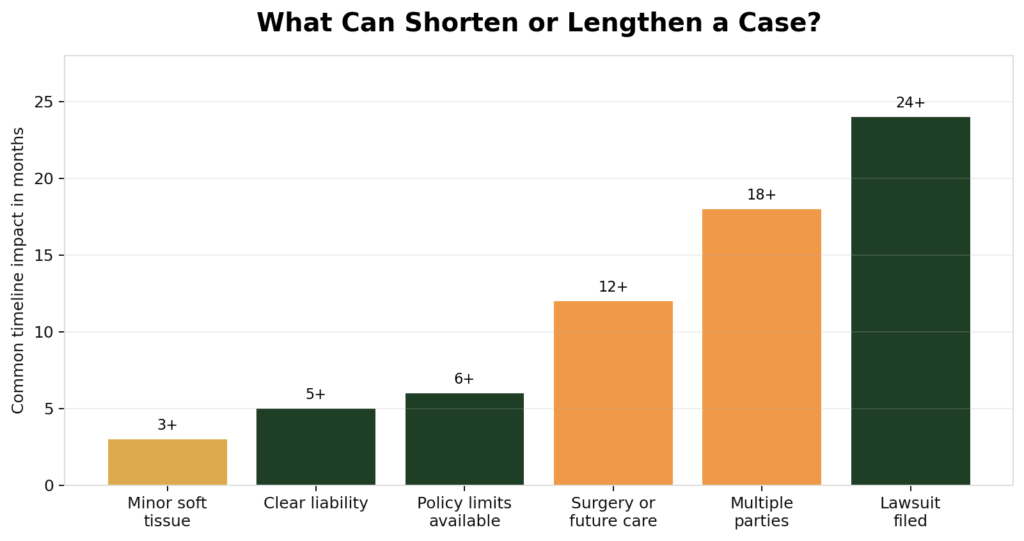
A personal injury case may take longer when:
- The injured person needs injections, surgery, specialist care, or future medical treatment.
- The defendant denies fault or argues comparative negligence.
- There are multiple liable parties, such as a commercial driver, employer, property owner, vehicle owner, or government entity.
- The case involves truck accidents, rideshare crashes, bike or scooter accidents, premises liability, dog bites, or other fact-specific claims.
- The insurance carrier disputes whether the crash caused the injury.
- The at-fault party has low policy limits and additional coverage must be investigated.
- A lawsuit must be filed to obtain discovery, testimony, and documents.
Medical Treatment Often Controls the Early Timeline
The settlement timeline usually depends on the medical timeline. If you are still treating, your attorney may not yet know the full value of the case. Settling before you understand whether you need injections, surgery, future therapy, or long-term restrictions can result in an unfair recovery.
This is why many cases do not enter serious settlement negotiations until the injured person reaches maximum medical improvement or at least a medically stable point. At that stage, the lawyer can evaluate past medical bills, future care, wage loss, pain and suffering, and whether the injury created permanent limitations.
How Long Does the Settlement Demand Process Take?
Once treatment records, bills, wage loss information, photographs, witness statements, insurance information, and other evidence are collected, the attorney can prepare a settlement demand. The demand package explains how the accident happened, why the other party is responsible, what injuries were caused, what treatment was required, and what compensation is being requested.
After a demand is sent, the insurance company usually needs time to review the materials. Some claims move quickly after the demand. Others go through several rounds of negotiation, especially when the insurer disputes treatment, argues that the injuries were preexisting, or offers far less than the claim is worth.
What Happens If the Insurance Company Will Not Settle Fairly?
If the insurer refuses to pay a fair amount, litigation may be necessary. Filing a lawsuit does not mean the case will automatically go to trial. Many cases settle after a lawsuit is filed because litigation gives the attorney access to formal discovery tools, depositions, subpoenas, expert testimony, and court-supervised deadlines.
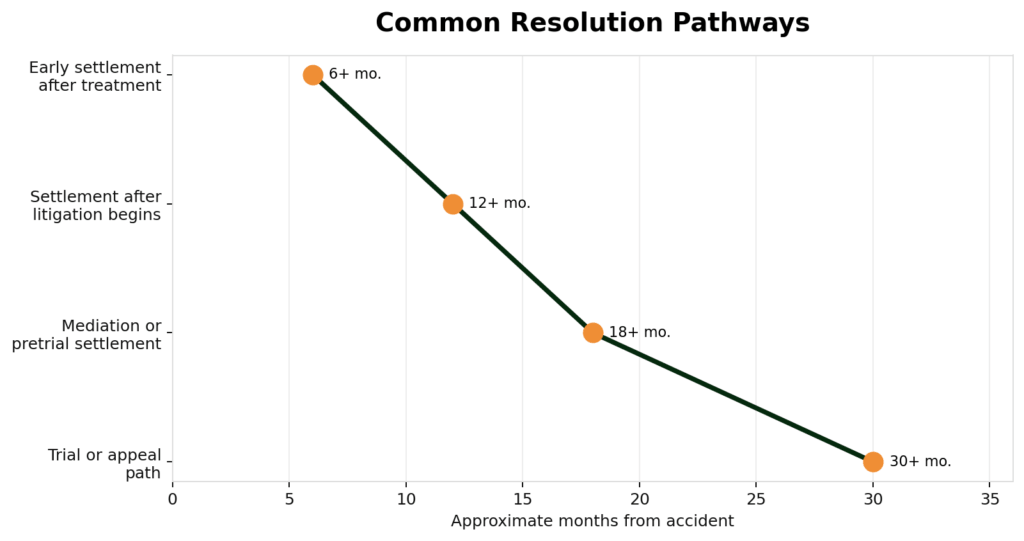
In Beverly Hills civil cases, the court must set an initial case management conference, where the court reviews the case, considers alternative dispute resolution, and may address trial setting and case management issues. Formal discovery also has deadlines tied to trial, including California Code of Civil Procedure section 2024.020, which generally allows discovery to be completed on or before the 30th day before the initially set trial date.
Different Case Types Move at Different Speeds
The type of accident can also affect timing. A minor car accident claim may resolve faster than a disputed premises liability case, a catastrophic truck accident case, or a wrongful death claim. Cases involving commercial defendants or corporate insurers often require more investigation because there may be driver logs, maintenance records, hiring records, video evidence, incident reports, or internal company policies that need to be obtained.
For example, Uber and Lyft cases can depend on the driver’s app status at the time of the crash. If your claim involves a rideshare driver, our Uber accident lawyers can help evaluate the available coverage and determine whether the rideshare policy applies. If you were injured while walking, biking, or riding an e-scooter, liability may depend on road conditions, driver conduct, visibility, crosswalk evidence, or scooter-related facts. Bike or scooter accident claims should be investigated quickly because video footage and witness information can disappear.
Premises liability claims may involve property owners, tenants, security companies, maintenance vendors, or businesses responsible for unsafe conditions. Dog bite cases can move differently because California has specific rules for dog owner liability and the key evidence may include animal control records, prior incidents, photographs, medical records, and witness statements. Truck accident cases may take longer because trucking companies and insurers often begin investigating immediately, and important evidence must be preserved quickly.
California Deadlines Still Matter Even If the Case Takes Time
The length of a personal injury case is different from the deadline to file. In California, most personal injury claims are subject to a two-year statute of limitations under Code of Civil Procedure section 335.1. That means an injury or wrongful death lawsuit generally must be filed within two years of the wrongful act or neglect.
A much shorter deadline may apply if a public entity is involved. Under Government Code section 911.2, a claim relating to injury, death, or property damage generally must be presented to the public entity within six months. This can matter in cases involving dangerous road conditions, government vehicles, public property, public buses, public schools, or other government-related defendants.
Because deadlines can be case-specific, injured people should not wait until treatment is finished before speaking with a lawyer. Waiting too long can make evidence harder to collect and can create avoidable statute of limitations problems.
Estimated Timeline by Case Complexity
| Case Type | Typical Range | Why It May Move Faster | Why It May Take Longer |
| Minor injury claim | 3 to 9 months | Treatment is completed quickly and liability is clear. | Symptoms persist, treatment gaps exist, or the insurer disputes causation. |
| Moderate injury claim | 6 to 18 months | Records, bills, and wage loss are well documented. | Injections, specialists, disputed bills, or limited insurance delay resolution. |
| Serious injury claim | 12 to 30+ months | Liability is clear and coverage is available. | Surgery, future care, expert opinions, and litigation may be needed. |
| Wrongful death or catastrophic injury | 18 months to several years | The defendant accepts liability and coverage is adequate. | Multiple parties, expert discovery, commercial insurance, or trial preparation may be required. |
Frequently Asked Questions
1. How long does a personal injury settlement take?
A personal injury settlement may take a few months in a straightforward case, but more serious claims can take a year or longer. The timeline depends on medical treatment, evidence, liability, insurance coverage, and whether a lawsuit becomes necessary.
2. Can I settle before I finish medical treatment?
You can, but it is often risky. Once you sign a release, you usually cannot reopen the claim if your injuries worsen or you need additional treatment. It is usually better to understand your medical condition before accepting a final settlement.
3. Does filing a lawsuit mean my case will go to trial?
No. Many personal injury cases settle after a lawsuit is filed. Litigation can help move the case forward by forcing evidence exchange, depositions, expert review, mediation, and court deadlines.
4. Why is my case taking so long?
A case may take longer because you are still treating, the insurer is disputing liability or causation, policy limits are low, multiple parties are involved, or litigation is required to obtain evidence.
5. What can I do to help my case move faster?
Get medical care promptly, follow your treatment plan, keep records, avoid gaps in treatment, preserve photographs and evidence, provide wage loss information, and avoid giving unnecessary recorded statements to insurance adjusters.
6. When should I contact a personal injury lawyer?
You should contact a lawyer as early as possible, especially if you are injured, fault is disputed, there are multiple parties, a government entity may be involved, or the insurer is pressuring you to settle quickly.
Speak With The Injury Partners About Your Case Timeline
A personal injury case should move with purpose, but it should not be rushed at the expense of your recovery. The right timeline depends on your injuries, medical care, liability evidence, insurance coverage, and the conduct of the insurance company.
The Injury Partners personal injury lawyers in Beverly Hills can evaluate your case, explain what stage it is in, and identify the steps needed to protect your recovery. You can learn more when you meet our Beverly Hills personal injury attorneys. You can also request your free consultation online.
If your case involves a serious car accident, Uber or Lyft collision, premises liability incident, dog bite, truck accident, bike accident, scooter accident, or fatal injury, early legal guidance can help preserve evidence and avoid delay. If you lost a loved one, our wrongful death lawyers in Beverly Hills can help. Please call us a (310) 220-0066 for a free consultation.